This year, Women's History Month begins with the celebration of Purim and the story of Queen Esther.
When I was a kid, I used to dress up as Queen Esther for Purim. I loved the costume, the drama, the pageantry. But I didn't really understand how courageous she was. And I had no idea how incredible Queen Vashti was.
Here's the thing: this ancient story has everything to do with right now.
The Queen Who Said No
Queen Vashti is the first character we meet in the Purim story, and she's the one who gets erased from most retellings.
About 2500 years ago in what now is southwestern Iran, King Achashverosh wanted to show off his wealth to his guests.
So, he ordered his wife, Queen Vashti, to display herself wearing nothing but her royal crown.
Women were expected to follow their husbands' decisions without question. (Sound familiar? This is still happening today.)
Vashti said no.
She refused. In public. In an act unheard of at the time, she stood up for herself—even knowing it could cost her everything.
And it did. She was banished, possibly executed, and lost her position as Queen.
But she modeled something radical: the courage to say no, even at great personal risk.
The Queen Who Spoke Truth to Power
After Vashti was banished, the King arranged a beauty pageant to find a new queen. A Jewish girl named Esther, encouraged by her uncle Mordechai, reluctantly entered and won.
She became queen, but she hid her identity.
Meanwhile, the Jew-hating Haman was appointed Prime Minister. When Mordechai refused to bow to him, Haman was furious. He persuaded the King to issue a decree ordering the destruction of all the Jews.
Mordechai urged Esther to speak up—to tell the King what Haman was planning.
Esther was terrified. As a woman, she was essentially powerless. Approaching the King without being summoned could mean death.
But she did it anyway.
Using her intelligence, her courage, and yes, her position, she revealed her Jewish identity and accused Haman of attempting to destroy her people.
Haman was executed. Mordechai was appointed Prime Minister. And a new decree was issued, granting the Jews the right to defend themselves.
Esther risked everything to tell the truth.
What This Has to Do With You
Let's celebrate the Vastis and Esthers of today:
The women who speak out because they know it's the right thing to do.
The women who identify suffering and bring it to the public eye.
The women who take risks and put themselves on the line.
Maybe this is your Esther moment.
Maybe it's time for you to step up and live your unique purpose. To open your eyes, be present, and step into your greatness.
Maybe it's your time to shine.
And if you're a woman who has:
✅ A credit card in your own name
✅ Rented or bought property without a male co-signer
✅ The right to consent to your own medical treatment
✅ Played competitive sports in school
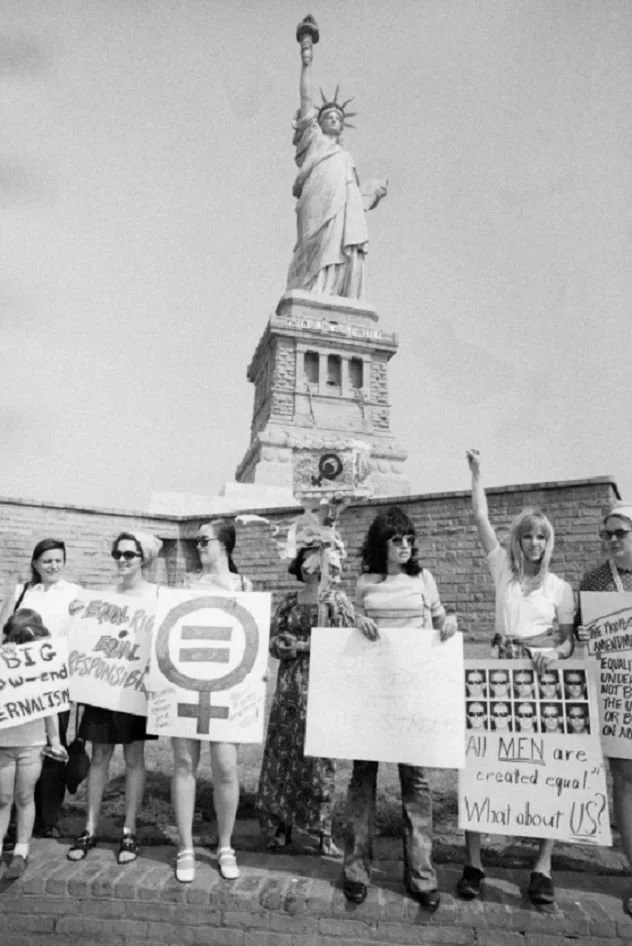
You can thank Ruth Bader Ginsburg and the generations of women like Shirley Chisholm, Betty Friedan, Gloria Steinem, Bella Abzug and others who fought for these rights.
They said no when they needed to. They spoke up when it was dangerous. They didn't wait for permission.
Let's flip the script: from fear to courage. From hatred to peace. From separation to unity.
Two Purim Traditions You Can Practice Right Now Regardless of your Religion.
There are two central traditions of Purim, and both are about building community:
1. Give money to those in need
Even a small amount. The intention is generosity and responsibility.
2. Give gifts to your neighbors
Food, flowers, a kind of note. The intention is connection.
These aren't just nice ideas. They're practices that create the world we want to live in.
This Women's History Month, say no to what diminishes you. Be the one who speaks truth even when it’s terrifying. Be the woman who flips the script!
With love and fierce courage,
Barbara
P.S. Who are the Vastis and Esther in your life? Reply and tell me. I'd love to interview fabulous women on my YouTube Channel and IG live.