People often ask me how I became a ritual teacher. The honest answer is that ritual found me through grief.
I was twenty-six and three months pregnant when I flew home to New York. My sister Sandi, just twenty-four, was dying of brain cancer.
She had been sick for two years, but no one in our family would say the word dying. In those days, we didn't talk about death, and cancer was a word we only whispered.
My brother told me Sandi wanted to tell me something important. But by the time I arrived, her speech was failing. She spoke, but the words made no sense. I would never know what she wanted to tell me.
At her funeral, we said Kaddish, the Jewish prayer for the dead, but the words felt empty.
Then, in the middle of the service, I felt Sandi's presence so strongly that I looked up and saw her standing a few feet away. Whether real or imagined, it comforted me.
Still, I never allowed myself to fully grieve. Everyone warned me that mourning too deeply would harm my baby, and part of me believed them. I shut down so completely that it was almost as if I had never attended the funeral at all.
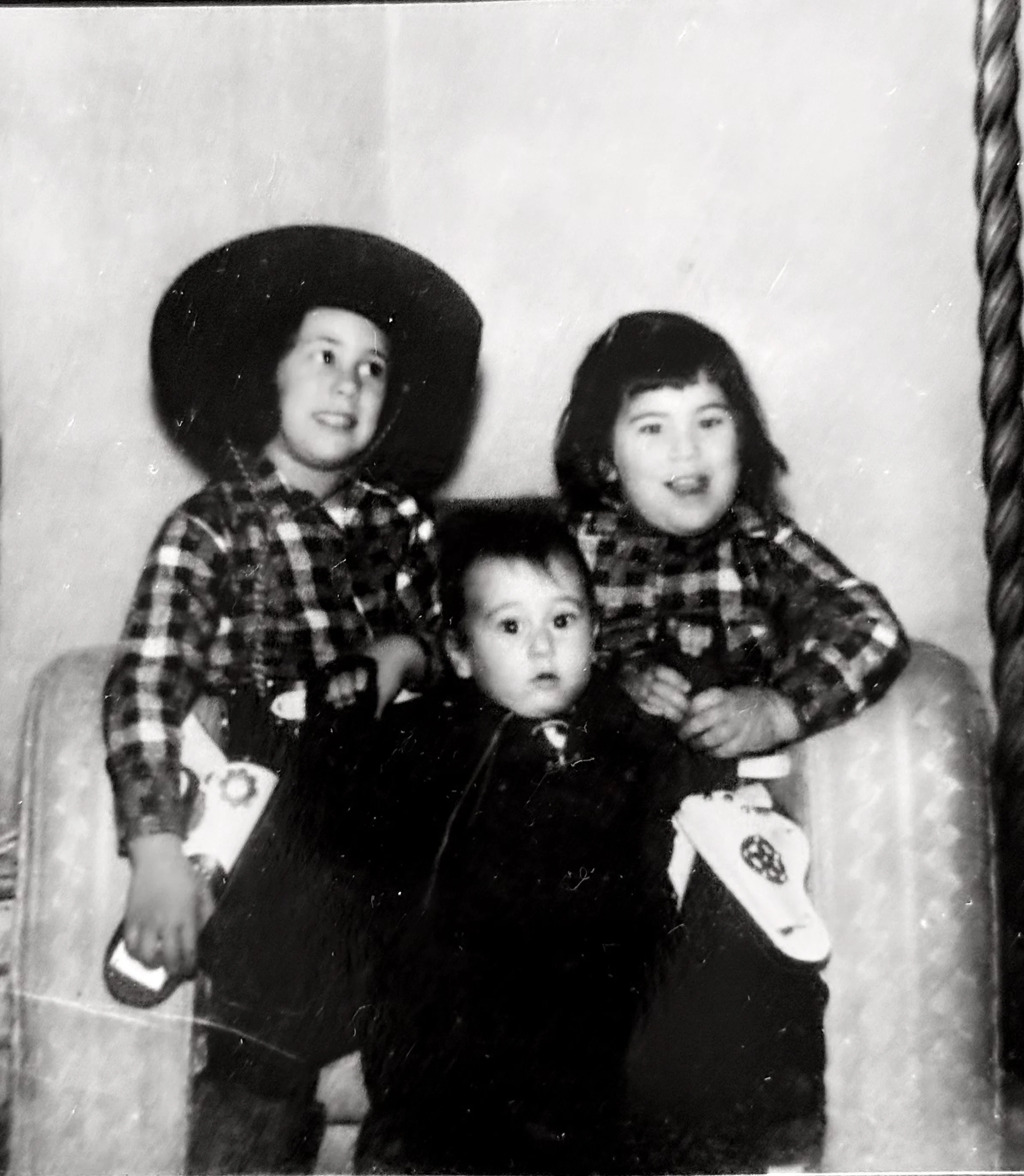
When my son Jourdan was born six months later, I quietly wondered if he carried something of Sandi. I told no one. I tucked my grief, my unanswered questions, and my uneasiness into a neat little package and tried to move on.
Years later, I attended a two-week retreat in Prescott, Arizona, with my teacher Dr. W. Brugh Joy, who taught the connection between mind, body, and spirit. We spent days in silence and fasting. My senses awakened. I noticed the colors, the sounds, the scents of nature.
And I began to realize that I was ready to face the grief I had held inside for so long.
On the seventh day, I climbed to the top of a mountain and found a large, beautiful tree. I dug a hole beside it so I could literally pour my tears into the Earth.
Then I began talking to Sandi.
I told her how much I missed her and how deeply I grieved the relationship we never got to have. For years, I had held back my tears, afraid that grieving too deeply would hurt the baby I was carrying. Now, finally, I let myself feel it all.
The more I spoke, the harder I cried. I rocked myself, allowing the grief I had held inside for years to finally move through me.
When I was ready, I covered the hole, sprinkled sage over the earth, and said a prayer.
Then it began to rain.
I felt as though God was acknowledging my grief, witnessing this moment of release.
Covered in mud, I made my way back, showered, allowing the water to wash over me. I finally understood why we wash our hands when leaving a Jewish cemetery.
I dressed in white, anointed myself with jasmine oil for love, and wrote down the commitments I wanted to make to myself.
Something had shifted.
I felt new. Lighter. The chatter in my mind quieted to a whisper. I stopped needing other people's approval for my spiritual path.
I began following my heart instead of my head, and for the first time, I felt how I fit into something larger than myself.
That was my first conscious ritual, and it changed my life.
I discovered that ritual could take me places that thinking alone could not.
It gave me a way to express what words couldn't hold, to honor what I had been carrying, and to move through an experience rather than simply bury it.
This is why I believe so deeply in ritual. Not because it is pretty or traditional, but because I have experienced its power firsthand.
Ritual can help us mark an ending, make room for a beginning, release what we have been carrying, and reconnect with the wisdom within us.
Sometimes we know something needs to change, but we don't know how to begin. Sometimes our hearts need something more than an explanation.
Ritual gives us a way to begin.
And that is why I have devoted my life to sharing.
With love,
Barbara